Full assessments or Micro Assessments
Complete the topic in one go, or answer coherent groups of questions a topic at a time. Both routes complete the same underlying assessment.
For partners and advisers
Give client conversations a shared evidence base. Use Enien to compare organisational perspectives, focus learning and investigate AI visibility, with delivery shaped around the agreed client question.
01
Agree the question, audience and scope before choosing how to deliver the work. Use relevant assessment content and framework sections as a starting point.
02
Complete the topic in one go or work through it in smaller sessions. Use workspace assignments or campaign participation to suit the audience.
Complete the topic in one go, or answer coherent groups of questions a topic at a time. Both routes complete the same underlying assessment.
Complete the training in one go, or build understanding through smaller, focused learning sessions.
03
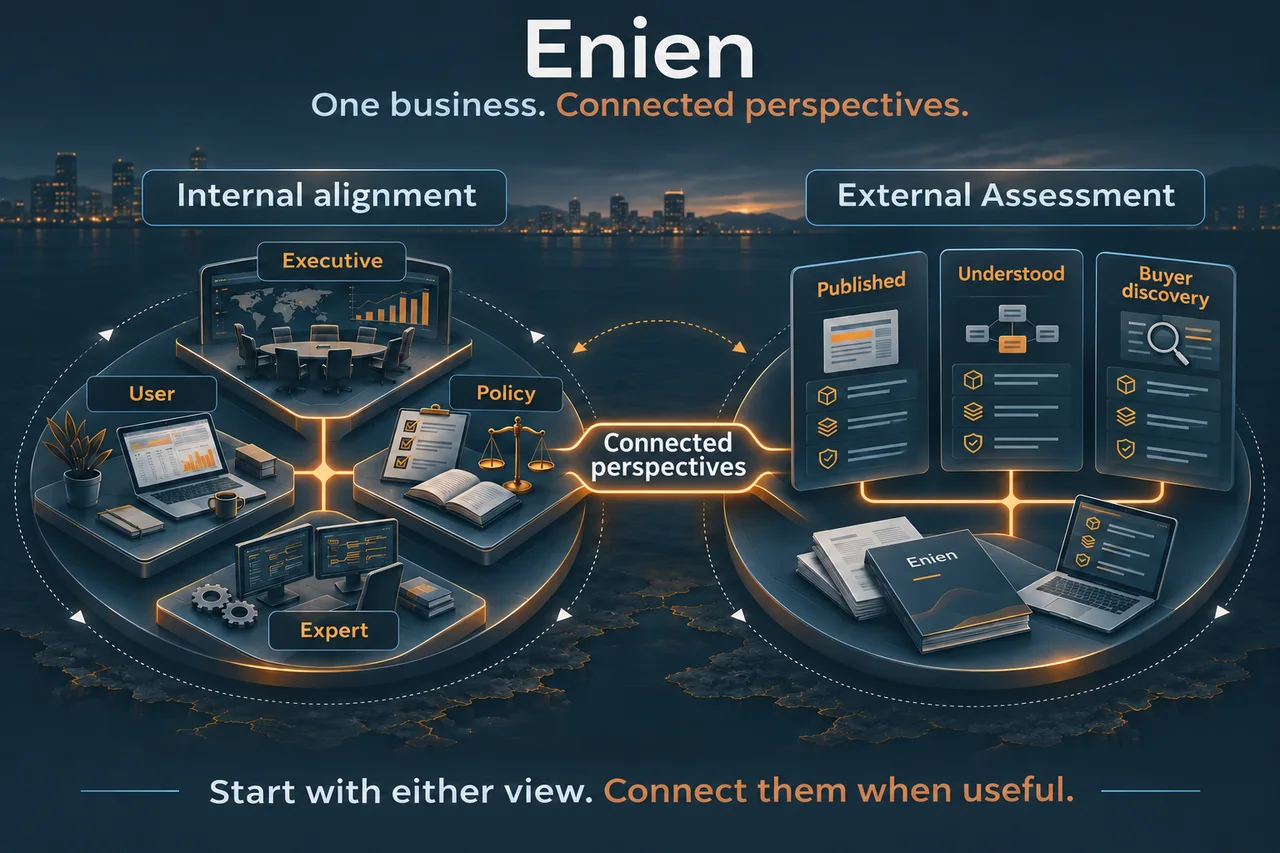
QuadraView helps compare executive, user, policy owner and expert views. Use the differences and evidence to guide your client conversations.
04
Help clients understand whether buyers asking AI about relevant solutions encounter their business. Use External Assessment as a standalone engagement, or connect external observations with internal perspectives through PentaView. Agree any deeper competitor research separately.
05
Explore comparisons across people, organisational groups and perspectives; trends over time; maturity, readiness and risk; and relevant averages, contextual targets and best-practice references. Drill into topics, questions and evidence and share the findings through reports. Your expertise shapes the interpretation and follow-up.
Available views depend on the assessment type, scope and recorded evidence. Trends use compatible completed assessments. Observed averages, organisational targets and best-practice references remain distinct.
Participants can use their account or a secure invitation or campaign link, depending on the programme setup. Email delivery needs an email address. Anonymous campaigns use their own participation settings.
Yes. Complete the same assessment in one go or topic by topic through Micro Assessments. The original questions and saved responses feed the same Enien analysis and reporting once the required assessment scope is complete.
Yes. Scope content around the topics, question groups or sections of a framework that matter to your organisation.
Learning and assessment have different purposes. Learning helps people understand a topic; assessment responses provide the input to the assessment result. Keep the two clear when designing a programme.
Micro Assessments deliver an assessment in small, coherent groups of questions, such as one topic at a time. Micro Learning delivers training in short, focused learning sessions. You can also complete the assessment or training in one go.
Enien supports comparisons across people and organisational groups, differences between perspectives, trends over time, and maturity, readiness and risk views. Relevant averages, contextual targets and best-practice references help put results in context. Drill into topics, questions and supporting responses or evidence, and communicate findings through reports. Available views depend on the assessment type, scope and recorded evidence.
Yes. Compare compatible completed assessments from different dates to see how results change. Comparable question coverage and the assessment dates matter: a change in scope or population should be considered when interpreting the trend.
Useful outcomes include a shared understanding, further investigation, a decision to keep the current approach or a targeted change. Examples include focusing learning, reviewing a policy or control, prioritising resources and checking progress. Use the relevant evidence and business context to choose the next step.
Tell us the problem, the people involved and where you would like to start.
Already a customer? Sign in to your workspace.